






Situated in the foggy folds of Himachal Pradesh, the twin hill destinations of Dalhousie and Chamba provide a retreat experience like no other. While Dalhousie is famous for its colonial architecture, pine-infused trails, and sweeping panoramic views, Chamba goes deep into culture, history, and unspoiled areas. It doesn’t matter if you are an adventurer, a peace seeker, or a wanderer; there is something to be discovered in both Dalhousie and Chamba.
How to Reach Dalhousie and Chamba?
- By Air: The closest airport to Dalhousie is Kangra Airport (Gaggal), approximately 107 km away. The airport is hardly busy and has limited connections, but flights to Delhi and Chandigarh still operate. A preferable option to Kangra Airport would be Amritsar Airport, approximately 200 km away, which offers better domestic and international connections.
- By Train: If travelling by train is your preference, Pathankot Railway Station is the nearest major rail head at around 80 km, and is well-connected to Delhi, Amritsar, and Jammu. Once in Pathankot, you could hire a taxi or take a bus to Dalhousie or Chamba.
- By Road: Dalhousie is well-connected by road to all major cities in North India. From Delhi, it is a distance of 560 km and approximately an 11-12 hour drive. Travellers can expect good road conditions, especially when you hit Himachal Pradesh, where vehicles drive more sensibly! Taxis are frequently taken to Dalhousie and Chamba from Pathankot, you can hire a car from Car rental companies or rent private vehicles can be organised, and Himachal Road Transport buses are regularly scheduled.
Best Time to Visit Dalhousie and Chamba
Dalhousie and Chamba are open for visitors all year long. However, each season of travelling offers a different experience.
- Summer (March to June) – Extremely pleasant weather, rhododendrons bloom, andan excellent search for sightseeing.
- Monsoon (July to September) – During the monsoon season, the area is lush and green; however, monsoons have a downside, which is surges of rainfall causing many “frequent“ landslides, and landslides should be taken seriously.
- Winter (October to February) – Winter has a snowy landscape, perfect for snow enthusiasts, especially at higher levels and at Dainkund or Khajjiar.
Where to Stay Dalhousie and Chamba?
Dalhousie provides all levels of accommodation, ranging from luxurious resorts to heritage hotels, budget home stays to inns and embassies from the colonial era.
- Budget travellers can find hostels or decent hotels for an average rate of ₹800-₹1,200/night.
- Mid-range accommodation can be anywhere between ₹1,500- ₹3,000 /night.
- Luxury accommodations with mountain views can be anywhere between ₹5,000- ₹7,000 /night.
Chamba provides fewer accommodation options, but has unique homestays and small hotels in the local area for a chance at local hospitality.
Read More: Yelagiri Hills: All You Need To Know Before You Go
5 Day Itinerary: Exploring Dalhousie and Chamba
Day 1: Arrival in Dalhousie- The Queen of Hills
Your extraordinary journey will begin in a hill town named Dalhousie, which was founded by the British in 1854 and named after Lord Dalhousie himself. Dalhousie is a beautiful starting point to your adventure for its extensive colonial architecture, high pine trees and natural vistas.
Where do you begin? One solution is to take a pleasant walk along Garam Sadak, the pedestrian path under thick pine trees and colonial homes, which links Gandhi Chowk and Subhash Chowk, the main junctions in Dalhousie. You can simply just have a coffee in the peace of one of the cafes, or do some local shopping for Himachali woollens and other handicrafts.
After the sun goes down, you could take a nice stroll through an easy 5 km trail called Bakrota Loop. There are magnificent views of all the mountains all around you all of Bakrota Loop will be marked on your path. You can take a peaceful walk or just sit on a bench in a quiet place for reflection or photos.
Day 2: Khajjiar, Kalatop, and Dainkund- Nature’s Symphony
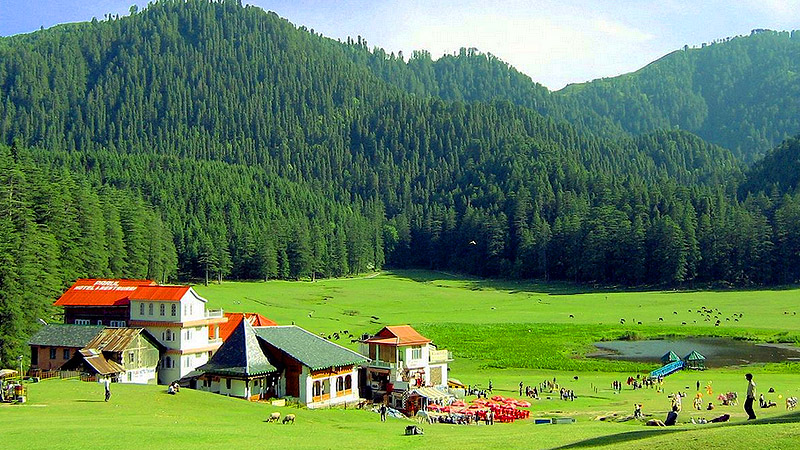
Use the second day for a nature retreat. Directional travel to Khajjiar, often referred to as the “Mini Switzerland of India.” Only a 22 km distance from Dalhousie, this lush green meadow, surrounded by dense deodar forests, contains a peaceful lake in the middle. Walk along the perimeter of the lake, see the Khajji Nag Temple, a wooden temple from the 12th century dedicated to the serpent god, and if you’re feeling adventurous, try zorbing or horse riding. From Khajjiar, travel to Kalatop Wildlife Sanctuary. A thick forest area that is home to a variety of wildlife, including Himalayan black bears, pheasants, leopards, and more. The path to Kalatop Rest House has views of the snow-capped Pir Panjal range, and is a birdwatcher’s paradise.
Complete the day at Dainkund Peak, the highest peak in the area. A quick 1.5 km trek leads to the summit, which offers a 360-degree view of the valley below. On a clear day, you can see the Punjab plain and the snowy Himalayan peaks. The trail ends at the Pholani Mata Temple, a local shrine that is important to area villagers.
Day 3: Chamba Town and Bhuri Singh Museum- A Cultural Shift
On your third day, make the short drive of 55 kilometres from Dalhousie to Chamba, a beautiful drive through forests of pine and along the Ravi River. Chamba has history and tradition. Your first stop will be Chaugan, a large open field in the centre of town where festivals and gatherings occur. Walk from there to the Bhuri Singh Museum, which showcases ancient manuscripts, miniature paintings, sculptures, and coins that have a historical relationship with the area.
After that, walk over to the Laxmi Narayan Temple Complex, which consists of six stone temples built in the 10th century. The temples were constructed in the shikhara style, which gives them a uniquely distinctive architecture and religious significance.
If you have a little more time, take a look at the Rang Mahal, a unique mixture of Mughal and British architecture, which was originally the residence of royal beings, whether they were Rajput or British royalty.
Walk along the Ravi River in the evening, allowing yourself to slow down and see how Himachalis live, enjoying cooking smoke from traditional homes.
Day 4: Chamera Lake and Surrounding Villages- Waterside Serenity
By now it is the fourth day, so it’s a chill day at Chamera Lake, which is about 30 km from Dalhousie. The artificial lake was formed by the construction of the Chamera Dam on the Ravi River. The turquoise water and the misty mountains provide an extremely picturesque panorama and can feel like a postcard image.
You can enjoy a boat ride or kayak, or you can take a picnic and find a spot on the shore and just sit. The ride also takes you through small villages, terraced fields, and cedar trees. You will get a view of the rural parts of Himachal.
On your way back, stop at Bhalei Mata Temple, situated at the hilltop viewpoint, where you have expansive views of the valley. This temple is known for being a popular pilgrimage site and for its stillness and quietness.
Day 5: Panchpula and Departure
Before you leave Dalhousie, it is well worth your while to go to Panchpula, a small cascading waterfall only 3 km from the main town. This beautiful site is renowned not only for its natural beauty, but also because it is the grave of Sardar Ajit Singh, a freedom fighter and uncle of Bhagat Singh.
There are also several small cafés and tea stalls in the area where you can enjoy a hot breakfast next to gurgling streams. If you’re feeling industrious enough, you may also hike up to the Satdhara Springs, which are said to contain medicinal properties because of the presence of mica.
You can then return to Dalhousie for one last shopping spree or light lunch before starting your journey home.
Offbeat Experiences in Dalhousie and Chamba:
For those seeking experiences beyond the typical tourist trail:
- Bharmour: Approximately 65km from Chamba, this lesser-known village is known as the original capital of Chamba, and the home of the Chaurasi Temples, 84 shrines that date back over a thousand years.
- Jot Pass: A tough drive, Jot Pass offers some of the most breathtaking views of the area. It is often snowbound in the winter, making it a fantastic spot for snow trekkers.
- Bakloh: An ex-army cantonment town located close to Dalhousie. Bahloh is quiet, not overrun by tourists and a good choice for those needing to get away and unplug. Staying in a homestay here allows an opportunity to see what local life is really like.
- Trekking routes: The Ganji Pahari trek is a half-day trek, just 5 km from Dalhousie, named after its “bald” appearing hill, which gives trekkers 360-degree views, including beautiful sunset views.
Local Cuisine of Dalhousie and Chamba:
While in Himachal, don’t forget to sample local delicacies such as:
- Chha Gosht: A spicy lamb curry made with gram flour and yogurt.
- Madra: A chickpea and yogurt dish from Chamba’s local cuisine.
- Siddu: A steamed wheat bun eaten, usually, with ghee and chutney.
- Dham: A festive thali associated with Himachali weddings and temple feasts.
In Dalhousie, most restaurants serve north Indian, Chinese, and Tibetan food, but for true local taste, ask locals to direct you to local food!
Things to Keep in Mind:
- Altitude Prep: Although not that high, if you’re altitude sensitive, then take it slow and stay hydrated.
- Cash over Card: A lot of places in Chamba still prefer cash, and there are limited ATMs.
- Warm Clothes: Weather can change quickly; even in the summer, bring light woollens.
- Respect Locals: There are dress codes and photography rules at many temples. Always check before taking a picture.
- Eco-Friendly Travel: No plastic, use reusable bottles, and leave nature as you found it.
Dalhousie and Chamba are more than just an escape to the mountains; even for the average traveller, they are true time capsules of culture and nature. From wandering the pine forests in Dalhousie, meditating by Chamera Lake, or admiring centuries-old temples in Chamba, these hill towns provide a break from the chaos of city life.
This travel guide shall be your invitation to slow down, enjoy the mountain air, and experience the best of Himachal Pradesh that only a select few know.