
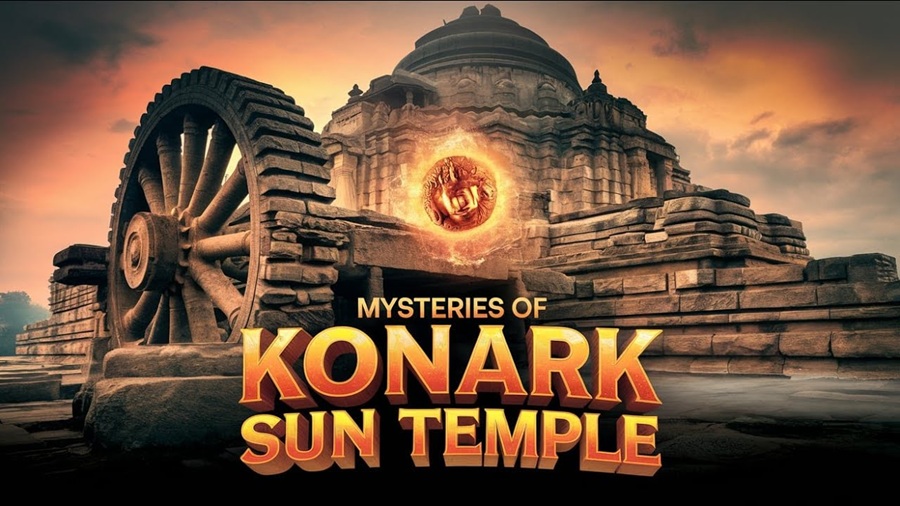
The Konark Sun Temple, rising from the sands of Odisha like a stone poem to the Sun God, is more than just a UNESCO World Heritage Site. It is a place where history, science, spirituality, and mystery collide. For centuries, travelers, historians, architects, and scientists have been fascinated by its precise design, hidden symbolism, and unanswered questions.
Why was this magnificent temple shaped like a chariot?
How did ancient builders achieve such astronomical accuracy?
What caused its partial collapse?
And is there truth behind the legends of magnetic stones and curses?
If you are a traveller who’s seeking meaning beyond sightseeing, the Konark Sun Temple mystery offers an unforgettable journey where history meets mystery.
Introduction to Konark Sun Temple
Located about 35 km from Puri and 65 km from Bhubaneswar, the Konark Sun Temple stands on India’s eastern coast, facing the Bay of Bengal. Built in the 13th century, it was dedicated to Surya, the Sun God, and designed to catch the first rays of the sunrise.
Unlike most Indian temples, Konark is not a place of active worship today. Instead, it functions as a monument of architectural brilliance and ancient knowledge, drawing millions of visitors each year.
Historical Background: Who Built the Konark Sun Temple?
The Konark Sun Temple was built during the reign of King Narasimhadeva I of the Eastern Ganga dynasty around 1250 CE.
Purpose of Construction
Historians believe the temple was built:
- To celebrate military victories over invaders.
- To symbolize the king’s devotion to Surya.
- To showcase political power and divine legitimacy.
- The name “Konark” comes from:
Kona (corner)
Arka (Sun)
Meaning: “Corner of the Sun”
Architectural Marvel: A Stone Chariot of the Sun
The Chariot Design
The temple is shaped like a gigantic stone chariot:
- 24 elaborately carved wheels
- 7 powerful stone horses
- Pulled toward the east to symbolize the Sun’s journey across the sky.
Each wheel is about 12 feet in diameter and intricately carved with symbols of time, seasons, and life.
The Time-Telling Wheels Mystery
One of the greatest mysteries is that:
- The wheels function as accurate sundials.
- Shadows cast by spokes can tell time down to minutes.
This suggests advanced knowledge of astronomy and mathematics long before modern instruments existed.
The Magnetic Stone Mystery
One of the most popular legends surrounding the Konark Sun Temple mystery involves a massive lodestone (magnetic stone).
The Legend Says:
- A powerful magnet was placed at the top of the temple.
- It caused the main idol to float in mid-air.
- The magnetic field disrupted ship compasses in the Bay of Bengal.
Some versions claim:
- European sailors removed the magnet.
- Its removal destabilized the structure, leading to collapse.
Historical Reality
Modern historians debate this theory. No physical magnet has been found, but the precision of alignment and unexplained structural collapse keep the legend alive.
Why Did the Konark Sun Temple Collapse?
The collapse of the Konark Sun Temple is still one of India’s biggest mysteries. No one knows the exact reason, but historians have shared a few possible explanations.
Weak Structure Over Time
The temple stones were held together using iron clamps, not cement. Over many years, the iron was exposed to air and moisture. This caused it to rust and expand, slowly weakening the temple from the inside and leading to its collapse.
Magnetic Stone Theory
According to legends, a strong magnetic stone was placed at the top of the temple. It helped keep the structure balanced. Some stories say the stone was later removed, which caused the temple to lose balance and fall. There is no proof, but the story adds to the mystery.
Natural Disasters
The temple is close to the sea, an area often hit by cyclones, heavy storms, and earthquakes. These natural disasters may have damaged the temple again and again, which made it weaker over time.
Attacks and Destruction
Historical records mention attacks by Kalapahad, a general from the 16th century who destroyed many temples. It is believed that parts of the Konark Sun Temple were damaged during invasions, which helped cause its collapse.
By the 18th century, the main tower of the temple had already fallen. Only the Jagamohana (assembly hall) was still standing, which was later filled with sand to stop further damage.
Konark Sun Temple Travel Guide
Best Time to Visit
- The best time to visit the Konark Sun Temple is from October to February, when the weather is pleasant and comfortable for sightseeing.
- During these months, the temperature is moderate, which makes it easier to explore the temple complex.
- Travelers are advised to avoid visiting during the peak summer months, as the heat can be very intense and tiring.
Entry Fees
- Indian tourists – 40Rs
- Foreign tourists – 600Rs
- Children under 15 years – Free
Timings
- Timing – 6:00 AM – 8:00 PM (Daily)
- The Konark Sun Temple is open to visitors from sunrise to sunset every day.
- Visiting early in the morning is highly recommended, as the weather is cooler and the soft sunlight is ideal for photography and peaceful exploration.
How to Reach Konark Sun Temple
By Air
- The nearest airport to the Konark Sun Temple is Biju Patnaik International Airport in Bhubaneswar (BBI).
- From the airport, travelers can hire a cab on rent or take a bus to reach Konark, which is about 65 kilometers away.
By Train
- Both Bhubaneswar and Puri have well-connected railway stations with trains from major cities across India.
By Road
- Konark is well connected by road to nearby cities like Puri and Bhubaneswar.
- Regular government and private buses, as well as taxis, are available from both cities.
- The coastal drive from Puri to Konark is especially scenic and is highly recommended for travelers who enjoy beautiful sea views.
Nearby Attractions for Travelers
- Chandrabhaga Beach is famous for its beautiful sunrise views and offers a clean and peaceful environment for visitors.
- Ramachandi Temple is located beside a river and is known for its scenic and calm surroundings.
- Puri Jagannath Temple is a major pilgrimage site located nearby and attracts devotees from all over India.
- Odisha Crafts Village is an ideal place to buy traditional handicrafts and souvenirs made by local artisans.
Travel Tips for Visitors
- Hiring a local guide can help visitors understand the history and hidden details of the Konark Sun Temple more deeply.
- Visiting the temple early in the morning helps avoid crowds and offers a more peaceful experience.
- Visitors should carry drinking water, sunscreen, hats, or umbrellas to protect themselves from the sun.
- All monument rules should be respected, and climbing on the temple structure is strictly prohibited.
- You can book a car on rent to visit the temple and nearby places to travel at your own pace.
- Photography is allowed inside the complex, but the use of drones is not permitted.
Events and Festivals at Konark Sun Temple
The Konark Sun Temple is not only a historic monument but also a hub of cultural activities, attracting visitors from all over India and the world. The most famous event is the Konark Dance Festival, held every year in December. This five-day festival celebrates classical Indian dance forms such as Odissi, Kathak, Bharatanatyam, and Kuchipudi, performed by renowned artists against the stunning backdrop of the temple. The festival beautifully combines art, history, and spirituality, giving visitors a chance to experience the temple’s cultural legacy firsthand.
During festivals like Makar Sankranti and Chhath Puja, devotees gather near the temple and Chandrabhaga Beach to offer prayers to Surya, the Sun God. These occasions provide a glimpse into ancient rituals and local customs, making it a culturally immersive experience for visitors.
Tourists planning to visit during festivals should book accommodations in advance, as the area becomes busier than usual. Attending these events not only adds excitement to the trip but also allows travelers to understand the temple’s living cultural heritage.
The Konark Sun Temple, through its festivals and events, remains a vibrant center where history, art, and devotion meet, making any visit truly memorable.
Why Konark Sun Temple Still Fascinates the World
The Konark Sun Temple mystery lies not just in what we know, but in what we don’t.
It raises timeless questions:
- How advanced were ancient civilizations?
- What knowledge has been lost to time?
- Where does myth end and science begin?
For travelers, Konark is not just a destination but also an experience of wonder.
Standing in front of the Konark Sun Temple is a powerful experience. You are not just looking at an old monument made of stone; you are standing before centuries of history, knowledge, and mystery. Every wall, wheel, and carving tells a silent story of skilled craftsmen, deep devotion, and advanced understanding of science and art. Even in its ruined state, the temple continues to inspire awe and curiosity.
For travelers who enjoy learning about history, admiring meaningful architecture, and exploring places filled with mystery, Konark is a destination worth visiting. It offers more than beautiful views and photo opportunities; it offers a deep connection to India’s rich past. A visit to the Konark Sun Temple is not just a journey through space, but a journey through time. Here, history truly meets mystery, leaving every visitor with wonder and respect.