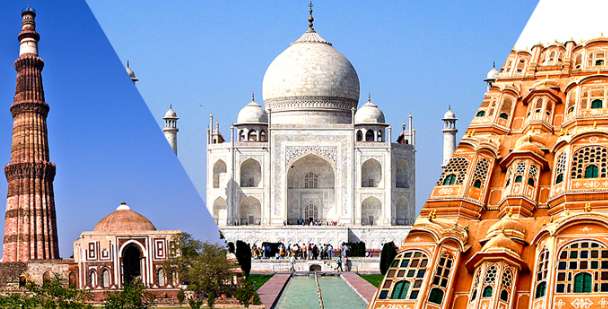








Qutub Minar in Delhi is the tallest stone tower in the world, and one of the most iconic monuments in India. The height of this tower is around 238 feet, which is equivalent to a 20-storey building in modern days. The monument’s stark, majestic appearance creates a sense of mystery, as do the extensive Hindu and Muslim ruins around it. The ruins marked the end of the Hindu reign in Delhi in the 12th century and the beginning of the Muslim rulers in the National Capital. With its recognition in history, the Qutub Minar complex was listed as a UNESCO World Heritage Site in 1993. This guide will help you get an idea of this popular monument and learn more about its importance.
History of Qutub Minar:
It is popularly stated that Qutub-ud-Din-Aibak, when he came to power in the early 13th century, commissioned Qutub Minar. He was also the first ruler of North India and the founder of the Delhi Sultanate. The monument’s real origin and purpose have been a subject of controversy among historians. This comes from the fact that the site where it is built previously belonged to the Hindu Rajput Rulers. The fortified city of Lal Kot was established in the 8th Century by Raja Anangpal I of the Tomar Dynasty. It is known as the first surviving city of Delhi.
It is said that various Hindu and Jain temples were built in the place where the iconic monument now stands. Initial Muslim rulers partially demolished them and converted them to various Islamic structures. The materials were used from the razed temples in their mosques and other buildings built during those times. Thus, the structures, including the Qutub Minar, have carvings of sacred Hindu scriptures or Gods on them. This has led to ongoing debate as to whether the Hindus or the Muslims have built the Qutub Minar. Who was the main person behind this creation? And why did he build so?
It is widely believed that the Qutub Minar served as either an Islamic mosque tower for muezzins to call the devotees to prayer at the mosque or a triumph tower to commemorate the beginning of Muslim dominance in India. However, there are several issues with these beliefs, according to historians. They argue that the monument lacks proper inscriptions, it is too tall to have been built for the call to prayer, and the entrance is not in the right direction.
Nonetheless, the design of the Qutub Minar looks similar to some other monuments in other countries, mostly the Minaret of Jam. It is also a UNESCO World Heritage Site in western Afghanistan, built in the 12th century.
The eastern entrance of the Quwwat-ul-Islam mosque, next to Qutub Minar, has a Persian script, which also adds mystery to it. Associating the inscription with Qutub-ud-Din-Aibak, historians record that the mosque was built with the materials of the demolished Hindu temples.
However, it is nowhere mentioned in the Qutub Minar construction. There is also no mention of the first official story of the Delhi Sultanate, Tajul Maasir, written by a Persian historian, Sadruddin Hasan Nizami. He started compiling the work when Qutub-ud-Din-Aibak came to power. Its primary focus is on his brief four-year rule and the early rule of his successor, Shams ud-Din Iltumish (also known as Sultan Altamash), until 1228 AD.
The Qutub Minar has undoubtedly experienced numerous changes over the years, regardless of whether the Muslims constructed it from the ground up or converted an existing Hindu edifice. According to inscriptions on the monument, lightning struck it twice during the 14th century! Following damage to its uppermost level in 1368, Sultan Firoz Shah expanded and restored it, adding an Indo-Islamic cupola. During the reign of Sikandar Lodi in 1505, additional construction was done on the upper floors. The cupola was then demolished by a powerful earthquake in 1803. The British Indian Army’s Major Robert Smith made the required repairs, finishing them in 1828. He foolishly decided to replace the cupola with an architecturally disastrous Hindu chhatri (elevated domed pavilion) in the Bengali style. It was removed in 1848 and repositioned as Smith’s Folly, east of the monument.
Facts About Qutub Minar:
- The Iron Pillar: The iron pillar of Qutub Minar has stood tall without rusting for over 2000 years. This is incredible and astonishing.
- Accessing the Top Minar: The top of the minar was accessible to the general public before 1974. An electricity breakdown that left the tower’s staircase in complete darkness on December 4, 1981, sparked a stampede that claimed 45 lives. As a result, the tower’s interior is no longer open to the public.
- Tallest Brick Tower in the World: Qutub Minar stands 72.5 meters tall. The tower’s 379 internal stairs lead to the summit. Qutub Minar has a base diameter of 14.32 meters and a top diameter of 2.75 meters.
- Surrounded by Historical Monuments: The “Qutb Complex” refers to the collection of outstanding historical monuments that encircle the Qutub Minar. Major Smith’s Cupola, Sanderson’s Sundial, Alai Darwaza, the Tomb of Iltutmish, Alai Minar, Ala-ud-din’s Madrasa and Tomb, the Iron Pillar of Delhi, and Quwwat-ul-Islam Mosque are all part of the complex.
- Quwwat-ul-Islam Masjid: The first mosque in India was constructed close to Qutub Minar. “The Might of Islam Mosque” is the English translation of this mosque’s name. When you visit, you can see the essence of the ancient mosque, which was constructed on the ruins of a Hindu temple.
Days and Entry Details for Qutub Minar:
- Opening Hours: Open daily from 7:00 AM to 5:00 PM, including weekends and holidays.
- Entry Fees:
Entry Ticket Indians Foreigners Children under 15 years Price 30 500 Free
Ticketing Tips:
- Ticket counters are located across the road from the main entrance.
- Indian queues may be long during peak hours — consider buying tickets online.
- Foreign tourists have a separate, faster counter.
Facilities Available:
-
- Toilets, parking, and baggage counters are located near the ticketing area.
- Food is not allowed inside the complex.
Guide Options:
-
- Authorised guides are available, but narrations may vary.
- Many visitors prefer audio guides or free mobile apps for consistent information.
General Experience:
- The complex is well-maintained, with informative boards and maps throughout.
- Offers a rich historical experience in a clean, organized setting.
What to See in Qutub Minar?
Besides the Qutub Tower itself, several historical monuments are worth noting. Foremost among these is the Quwwat-ul-Islam Mosque, the first mosque to exist in India, famous for its strange architecture with the addition of the Alai Darwaza gateway. The Iron Pillar is also part of this complex, dating to the Gupta period (4th-5th century), famed for that rust-free composition and thought to have originally functioned as a sundial at Vishnupadagiri in Madhya Pradesh.
Further down are the tombs of Shams ud-Din Iltutmish (d. 1236), Ala-ud-din Khilji (d. 1316), and Imam Zamin (d. 1539), as well as the remains of Ala-ud-din Khilji’s madrasa. The Alai Minar, left unfinished, meant to be twice as tall as the Qutub Minar, stands as a reminder of Khilji’s grandeur but was abandoned with his death. Note that for safety reasons, after a tragic stampede in 1981, climbing to the top of the Qutub Minar is no longer permitted.
Best Time to Visit Qutub Minar
The best time to visit Qutub Minar is during the winter months, from October to March. This is when Delhi experiences its most pleasant and comfortable weather — ideal for outdoor sightseeing.
Cooler temperatures make it easy to walk around and explore the monument without the discomfort of heat or humidity. The mild winter sun enhances the beauty of the historic structures, making it perfect for photography and leisurely visits.
Another advantage of visiting during this season is the relatively smaller crowds, especially on weekdays. You’ll have more space and time to take in the architecture and history without feeling rushed.
Whether you’re a history enthusiast, a photographer, or a casual traveller, winter offers the best experience for discovering the charm of Qutub Minar.
Read More: Travel Guide India Guide
What To Do Nearby?
Mehrauli Archaeological Park:
- Location: Situated next to the Qutub Minar complex, South Delhi.
Key Historical Highlights in the Park
- Lal Kot and Fort of Delhi: Ruins that predate the 11th century, believed to be part of Delhi’s earliest known fortifications.
- Tomb of Balban: Notable for featuring the first proper arch and dome in Indian architecture — a significant milestone in Indo-Islamic design.
- Jamali Kamali Mosque and Tomb: A serene 16th-century structure dedicated to the Sufi saint Jamali, combining religious significance with Mughal-era elegance.
- Stepwells (Baolis): Several ancient stepwells are found throughout the park, once used for water storage and as cool resting places.
Nature & Adventure Nearby
Sanjay Van Forest (Adjacent to the park):
- A dense, wooded area perfect for nature lovers and trekking enthusiasts.
- Scattered remains of Lal Kot can also be explored here.
Tughlakabad Fort (Approx. 20 minutes east):
- A massive 14th-century fort built by Ghiyas-ud-din Tughlaq, offering a rugged and less crowded heritage experience.
Nearby Attractions for Leisure & Culture
- Garden of Five Senses (~10 minutes away): A beautifully landscaped 20-hectare garden offering an immersive sensory experience through art, nature, and architecture.
- Champa Gali Street (Saidulajab): A creative hub known for its quirky cafés, boutiques, and art spaces — great for a relaxed evening.
- Hauz Khas Village (~15 minutes north): A vibrant urban neighbourhood blending trendy eateries, ancient ruins, and a deer park, perfect for day-to-night exploration.
Dining with a Heritage View
- Restaurants with Qutub Minar View: Options include ROOH, QLA, and Dramz, offering fine dining with panoramic views of the monument.
How to Reach Qutub Minar
- By Metro: To reach Qutub Minar, take the Yellow Line of the Delhi Metro and get down at Qutub Minar Metro Station. The monument is located about 1.5 km from the station, and you can either walk for 15–20 minutes or take an auto-rickshaw or e-rickshaw for a quicker ride.
- By Bus: Delhi Transport Corporation (DTC) and private buses provide convenient access to the Mehrauli area. Nearby bus stops include Qutub Minar, Mehrauli Terminal, and Lado Sarai, all within walking distance of the monument.
- By Car: You can drive yourself or rent a car using services like ECO Mobility to reach Qutub Minar, which is located on Mehrauli-Badarpur Road in South Delhi. Paid parking is available near the monument entrance for visitors.
A visit to Qutub Minar is more than just sightseeing—it’s a journey through history, culture, and architectural marvels. Its towering presence, detailed carvings, and surrounding monuments offer a rich experience for every traveler. Whether you’re exploring Delhi for the first time or returning for more, Qutub Minar remains a timeless highlight. Don’t miss the chance to witness this UNESCO World Heritage Site and soak in the legacy it proudly represents. It’s truly a must-visit destination.